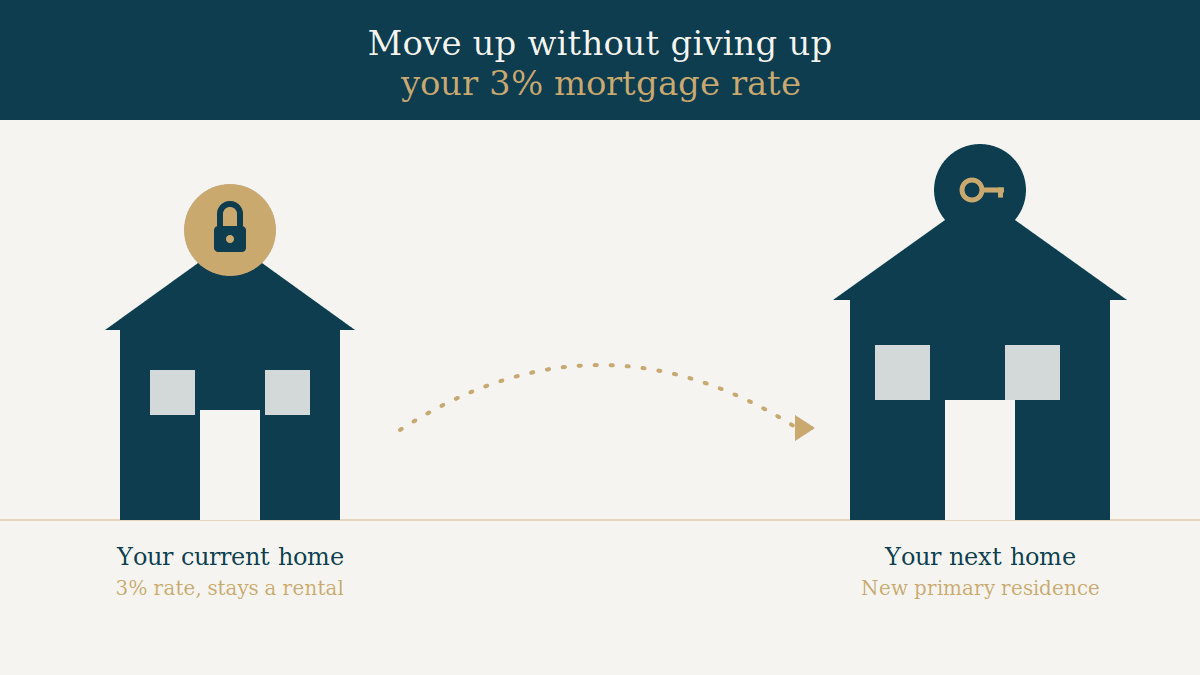
If you're holding onto a 3% or 4% mortgage rate, selling your current home to buy a new one can feel like a financial step backward. The "rate lock" effect has kept millions of homeowners stuck in place. Fortunately, Fannie Mae's updated guidelines (B3-3.8-05, Rental Income from Non-Subject Property: Departing Residence) offer a powerful workaround — allowing you to buy your next home while keeping your low-rate property as a long-term rental asset.
The Old Way vs. The New Guideline
In the past, converting a primary residence into a rental property while buying a new home created a massive timing headache during underwriting.
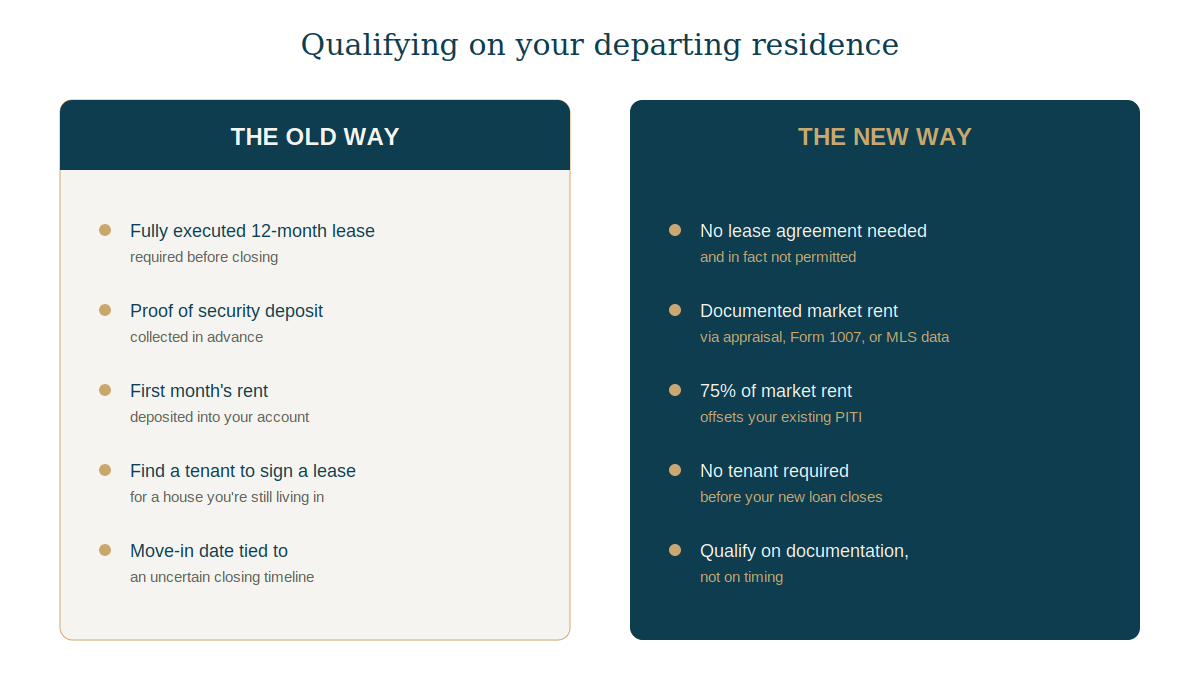
The Old Requirements: Lenders previously required a fully executed 12-month lease agreement, proof of a security deposit, and first month's rent deposited into your account before closing on your new home. That meant finding a tenant willing to sign a lease for a house you were still living in, with a move-in date based on an uncertain closing timeline.
The New Fannie Mae Rule: Under the updated policy, lease agreements are no longer required — and are explicitly not permitted to establish rental income for a departing residence. Instead, lenders qualify you using documented market rent for the property you're leaving behind.
How Lenders Document Market Rent & Qualify Your Loan
To offset your existing mortgage debt, the lender must verify what your property could reasonably rent for in the current market:
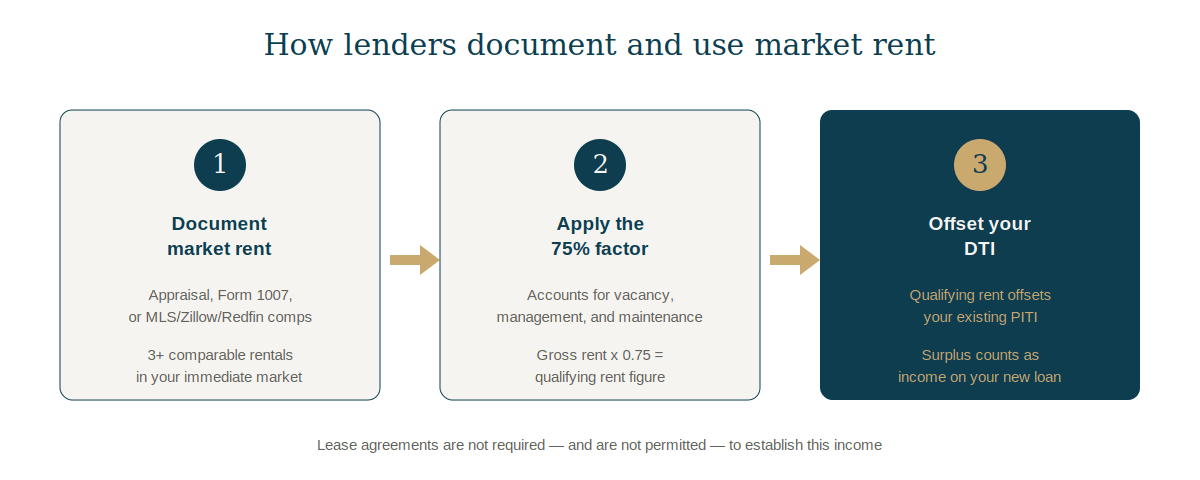
- Acceptable Documentation — Lenders establish market rent through a complete appraisal report, a Single-Family Comparable Rent Schedule (Form 1007), or a market analysis using tools like MLS, Zillow, or Redfin. The analysis must include at least three comparable rental properties within your immediate market area or subdivision.
- The 75% Rule — Lenders don't use 100% of the calculated market rent. To account for prospective vacancies, property management costs, and maintenance, Fannie Mae applies a standard 75% factor to the gross market rent.
- Debt-to-Income (DTI) Offset — The resulting 75% figure is used directly in your DTI calculation to offset your existing principal, interest, taxes, and insurance (PITI) payment.
A Real-World Example
Here's how this plays out for a homeowner making a move:
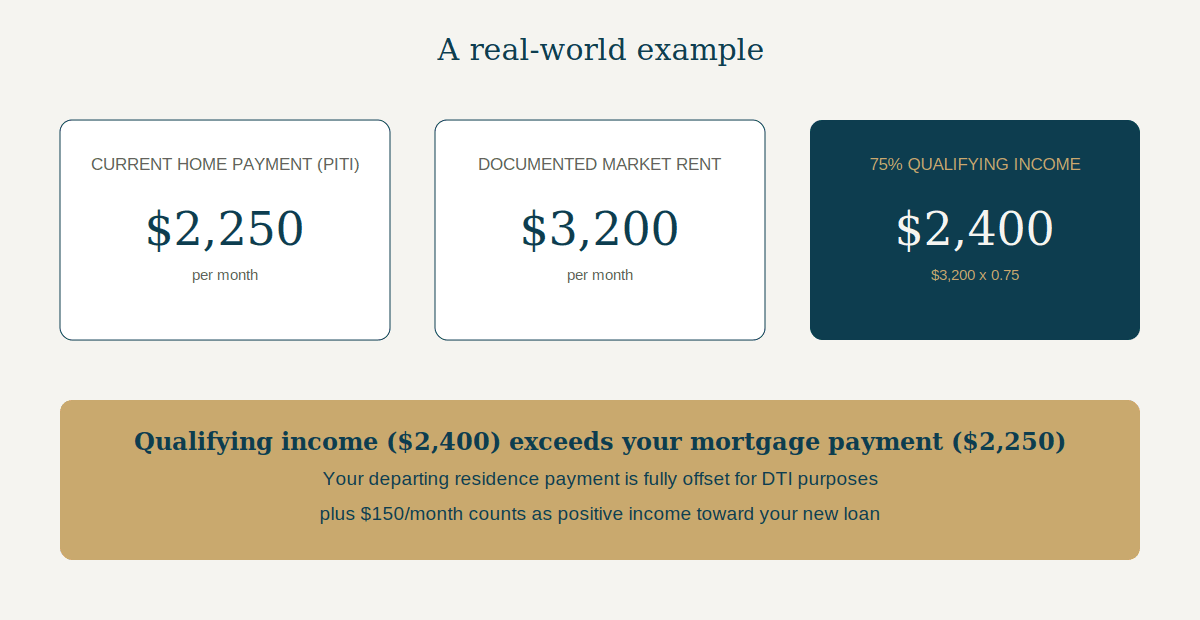
- Current Home Payment (PITI): $2,250/month
- Documented Market Rent: $3,200/month
- 75% Qualifying Income: $2,400/month ($3,200 × 0.75)
The Result: Because the qualifying rental income ($2,400) exceeds the current monthly mortgage liability ($2,250), the entire payment on the departing residence is completely wiped out for debt-to-income qualification purposes. The extra $150/month even counts as positive income toward qualifying for the new loan.
Key Mortgage & Underwriting Details to Keep in Mind
- Primary Residence Requirement — To use this guideline, your departing home must have been your primary residence, and your new purchase must be a new primary residence.
- Multi-Unit Properties — If you're vacating a multi-unit property (like a duplex), the lender will document market rent for your unit using the tools above, but will also require your most recent year of federal tax returns (IRS Form 1040) to verify existing rental income from the other units.
- Reserve Requirements — This rule simplifies DTI calculations, but lenders still assess overall financial strength. Depending on your credit profile and total debt ratio, you may need 2 to 6 months of mortgage reserves (PITI) covering both properties after closing.
Not sure if this strategy fits your situation? Talk to one of our agents about your options before you list.
Thinking About Turning Your Current Home Into a Rental?
Get a lender-ready market rent analysis before you list — free, no obligation.
Get My Free Market Rent AnalysisWe'll follow up within one business day with your comparable rent range.